17.3.4. Report on SDG 4: Quality Education
Samar Colleges, Inc. (SCI), established in 1949, has long recognized education as a means of improving individual lives and contributing to the development of communities. As a community-based, privately owned educational institution serving Samar Island and neighboring communities, SCI remains committed to providing affordable, accessible, relevant, and values-driven education from basic to graduate levels.
Quality education is at the center of the institution's vision and mission. Through its academic programs, instructional approaches, student support services, faculty development initiatives, research activities, and institutional quality assurance mechanisms, SCI continuously works toward improving the educational experiences and outcomes of its learners.
Providing Affordable and Accessible Educational Opportunities
Samar Colleges recognizes that access to quality education begins with providing learning opportunities that are relevant and responsive to the needs of its community. As a community-based institution, SCI serves learners from different backgrounds and educational levels, including students from Samar Island and neighboring communities.
The institution offers programs in basic education, senior high school, undergraduate studies, and graduate education. Its academic offerings cover fields such as teacher education, business administration, criminology, information technology, multimedia arts, sociology, and graduate studies in education. These programs provide learners with opportunities to pursue academic and professional development without necessarily having to leave their home province.
SCI also maintains academic support facilities and services that contribute to the accessibility of educational resources. Its libraries serve students, faculty members, and other members of the academic community through reference and information services, circulation services, internet access, library orientation, online public access catalog services, and research assistance. The institution maintains separate library facilities serving its various academic units, including the Main Library, Graduate Studies Library, CBM Library, Criminology Library, and Learning Resource Management and Development System (LRMDS) for Basic Education.
In support of students who require financial assistance, the institution also provides scholarship and student assistance mechanisms through its student affairs services and external partnerships.
Strengthening Teaching and Learning Through Digital Innovation
Recognizing the changing educational landscape and the need for flexible and technology-supported instruction, Samar Colleges has invested in digital learning initiatives that help improve access to educational resources and support continuity of learning.
A major institutional initiative is ResiLearn, SCI's Moodle-based Learning Management System (LMS). Developed to support flexible and continuous learning, ResiLearn provides a digital environment where teachers can organize learning materials, distribute instructional resources, monitor student participation, and facilitate learning activities beyond the traditional classroom.
The platform supports various instructional and monitoring functions, including attendance tracking, learning analytics, online learning resources, faculty-uploaded video lessons, virtual classroom activities, gamified learning features, and integration with academic tools such as Turnitin. Its low-bandwidth accessibility and availability of offline learning resources are particularly relevant to students who experience limitations in internet connectivity.
ResiLearn also supports the institution's efforts to maintain learning continuity during class suspensions and other disruptions. Given the geographical and connectivity challenges experienced by some learners in Samar and nearby communities, the platform provides an alternative means of accessing instructional materials and completing learning activities even when regular face-to-face instruction is interrupted.
In addition to the LMS, SCI has developed its own instructional courseware to support the delivery of lessons and provide faculty members with supplementary digital teaching resources. On September 10, 2026, the Programs Development and Quality Assurance (PDQA) team introduced the institution's Moodle-based LMS and in-house Courseware during the Basic Education Department's End-of-Term In-Service Training. Elementary, Junior High School, and Senior High School faculty members participated in hands-on sessions designed to familiarize them with the institution's digital learning tools.
These initiatives demonstrate SCI's continuing effort to integrate technology into instruction—not merely as an alternative delivery mechanism, but as a means of improving learning access, instructional organization, and the overall teaching and learning experience.
Addressing Learning Gaps Through Targeted Academic Interventions
Samar Colleges recognizes that learners have different levels of preparedness, learning needs, and academic challenges. Providing quality education therefore requires more than delivering lessons; it also involves identifying learning difficulties and creating appropriate interventions to help students improve.
One example is MATH-Tulungan: Mathematics Achievement through Tutoring and Hands-on Learning, an academic intervention developed in response to the mathematics learning needs of students.
The initiative emerged from the challenges experienced by learners when classes were disrupted and mathematics instruction shifted away from the regular classroom setting. Recognizing that some students needed additional explanations, opportunities for practice, and individualized assistance, SCI developed MATH-Tulungan to provide structured learning support.
Through peer tutoring, individualized activities, and hands-on learning experiences, the initiative encourages students to help one another understand mathematical concepts. Rather than simply providing answers to difficult problems, the intervention emphasizes guided learning, practice, collaboration, and the development of mathematical understanding.
MATH-Tulungan reflects the institution's recognition that learning difficulties should not prevent students from progressing academically. By providing additional opportunities for learners to receive assistance, the initiative supports a more inclusive learning environment in which students are encouraged to participate, ask questions, and develop confidence in their abilities.
The initiative also became part of a broader effort to extend learning support beyond SCI through PROGRAM CONNECT, allowing its approaches to be shared with partner schools.
Supporting Licensure Examination Readiness and Graduate Competence
As an institution that prepares students for professional practice, Samar Colleges recognizes the importance of equipping its graduates with the knowledge, skills, and competencies required in their respective fields.
In line with this commitment, SCI developed Project PREPARE, an initiative intended to strengthen the readiness of graduates for the Licensure Examination for Professional Teachers (LEPT). The initiative responds to the need for more systematic preparation and academic support for teacher education graduates as they transition from higher education into professional practice.
Through focused review activities and learning interventions covering relevant examination areas, Project PREPARE seeks to reinforce graduates' mastery of essential competencies and improve their preparedness for the licensure examination.
These initiatives reflect SCI's effort to connect educational quality with graduate readiness and professional competence. By providing structured preparation and accessible review resources, the institution seeks to help its graduates become more confident and better prepared to meet the requirements of their chosen profession.
Developing Faculty Competence and Improving Instructional Quality
Samar Colleges recognizes that the quality of education is strongly influenced by the competence, preparedness, and continuing professional development of its faculty members. The institution therefore provides opportunities for academic personnel to enhance their instructional capabilities, acquire new knowledge, and respond to emerging developments in education.
On July 15–18, 2026, SCI conducted a four-day Faculty Professional Development Seminar-Workshop in Tacloban City under the theme “Innovating Minds, Elevating Teaching: Empowering Faculty for Excellence in the Digital and Critical Thinking Era.” The activity focused on strengthening faculty knowledge and skills in areas influenced by artificial intelligence, research, digital technologies, and higher-order thinking.
The seminar provided an avenue for faculty members to engage in professional learning and reflect on the changing demands of teaching in an increasingly technology-driven educational environment.
The institution also conducted an in-service training session for its Basic Education faculty members on September 10, 2026, during which the PDQA team introduced ResiLearn and the in-house Courseware. The hands-on activity enabled teachers from the Elementary, Junior High School, and Senior High School departments to become more familiar with the digital tools available to support instructional delivery.
These activities form part of SCI's continuing efforts to develop a faculty workforce capable of delivering responsive, relevant, and technology-supported instruction. Through professional development, institutional training, and knowledge-sharing activities, the institution encourages its educators to continuously improve their teaching practices and adapt to the needs of contemporary learners.
Strengthening Institutional Quality Assurance and Academic Standards
Samar Colleges understands that quality education requires an institutional system that regularly evaluates its programs, processes, and learning outcomes. In this regard, the institution continues to strengthen its quality assurance mechanisms through curriculum development, program monitoring, institutional research, accreditation preparation, and continuous improvement initiatives.
The establishment of the Office of the Senior Vice President for Programs Development and Quality Assurance (PDQA) on September 1, 2024, further strengthened the institution's organizational capacity to coordinate academic development and quality improvement. Through its component offices, PDQA supports program and curriculum development, institutional research and extension, quality assurance, and information systems support.
Among the office's priorities are the promotion of continuous improvement, development of responsive academic programs, strengthening of research and accreditation processes, faculty and staff development, and the use of data-driven interventions to improve student and graduate performance.
SCI also continues to align its institutional processes with the principles of the ISO 9001:2015 Quality Management System. Its efforts include the development and harmonization of outcomes-based syllabi, documentation of academic processes, monitoring of instructional requirements, and improvement of institutional procedures.
The institution's commitment to educational quality was further recognized in September 2026 when SCI received the QAHE Excellence in Education Award for 2026–2027 from the International Association for Quality Assurance in Pre-Tertiary and Higher Education. The recognition acknowledged the institution's initiatives in quality assurance, institutional development, innovation, and community service, including its ISO-aligned practices, outcomes-based syllabus harmonization, digital learning initiatives, curriculum development, and research.
SCI also continued to engage in external quality monitoring. On October 20–21, 2026, the institution underwent a monitoring and evaluation visit by the Commission on Higher Education Regional Office VIII involving its Bachelor of Multimedia Arts program and compliance monitoring of four other academic programs. Such engagements provide opportunities for the institution to demonstrate compliance with applicable standards and identify areas requiring further development.
Extending Learning Opportunities Beyond the Institution Through PROGRAM CONNECT
Samar Colleges recognizes that its responsibility to promote quality education extends beyond its enrolled students. The institution also sees the value of sharing its resources, expertise, and learning innovations with other educational institutions, particularly those that may benefit from additional instructional support and digital learning capabilities.
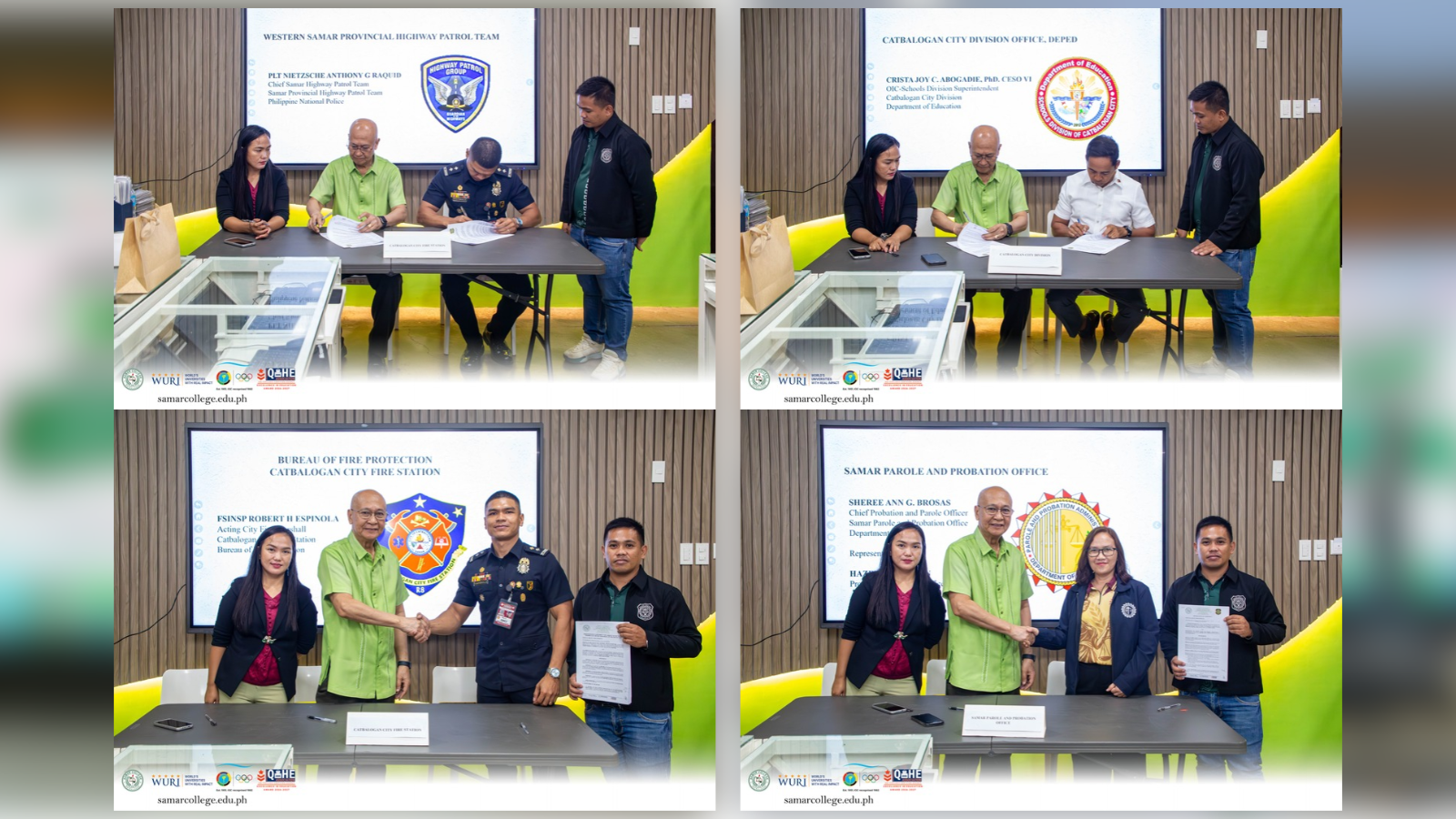
This commitment is demonstrated through PROGRAM CONNECT: Community Network for Continuity of Learning, a collaborative initiative involving Samar Colleges, Inc., the Schools Division Office of Catbalogan City (SDO-Catbalogan City), and Eastern Visayas Regional Science High School (EVRSHS).
The program brings together ResiLearn and MATH-Tulungan as learning support mechanisms intended to help sustain education during class disruptions and address identified learning needs. Through the partnership, SCI committed to sharing its digital learning resources and technical expertise with its partner school, while SDO-Catbalogan City provides institutional coordination and support for the initiative.
The partnership was formalized in September 2026, establishing a collaborative framework for extending digital learning opportunities and academic support beyond the institution.
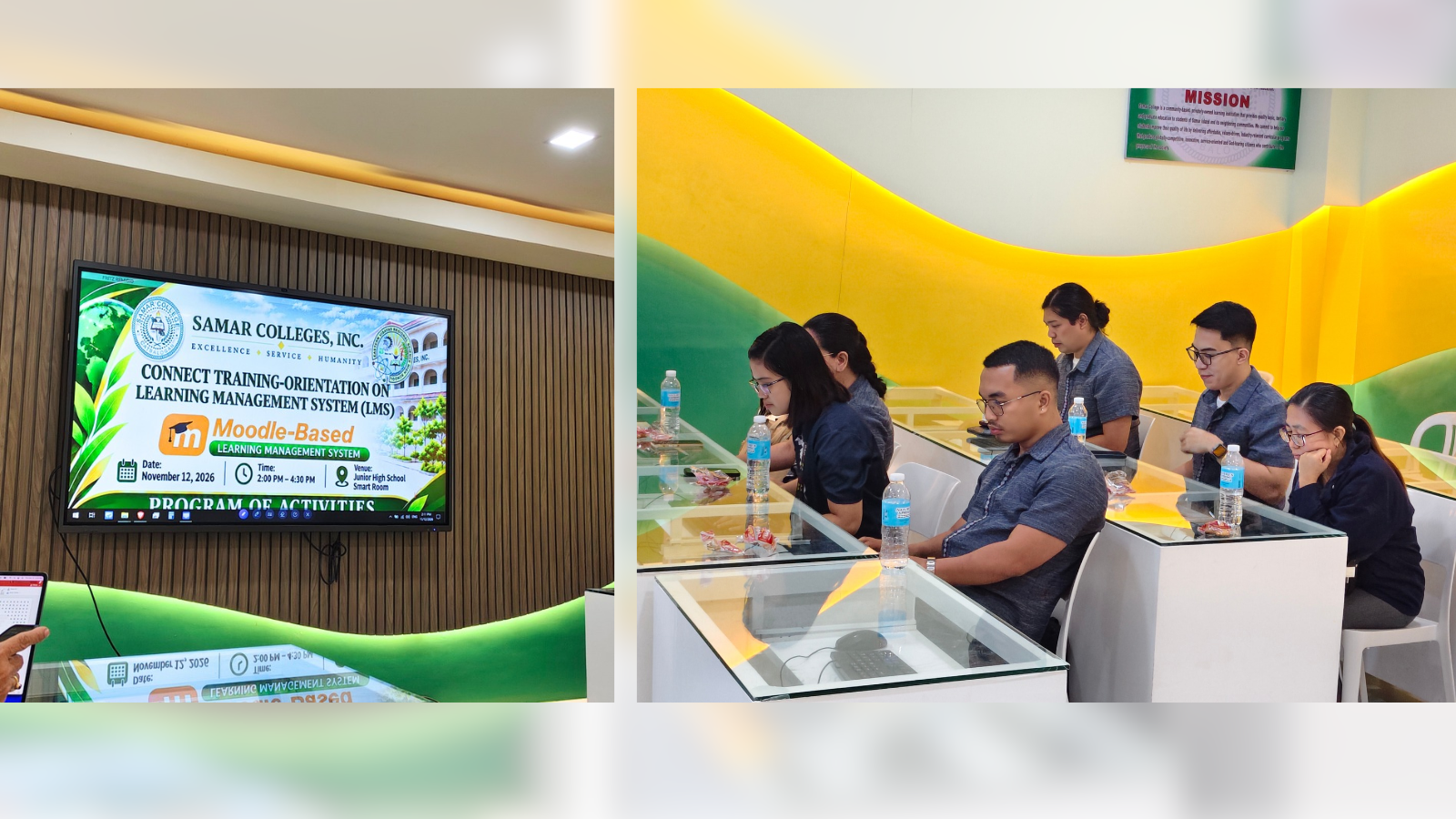
On November 12, 2026, SCI conducted a training-orientation on its Moodle-based LMS for six representatives of EVRSHS. The activity introduced the partner school's representatives to the platform and its functions, providing an initial step toward the use of SCI's digital learning resources in support of flexible and continuous learning.
PROGRAM CONNECT demonstrates how institutional innovation can contribute to broader educational development. By sharing its learning management platform, academic interventions, and technical expertise, SCI extends the potential benefits of its educational initiatives to another learning community.
Promoting Research, Innovation, and Lifelong Learning
Samar Colleges recognizes research and innovation as important components of quality education. Through its institutional research and development initiatives, the institution encourages faculty members and students to engage in inquiry, generate knowledge, and develop solutions that respond to educational and community needs.
The institution continues to strengthen its research governance and capacity-building mechanisms. On September 24–25, 2026, SCI conducted a two-day Seminar-Workshop on Research Ethics Review and Accreditation Readiness, bringing together deans, program heads, coordinators, and faculty members from different academic units.
The activity covered research ethics principles, informed consent, protocol review, and institutional ethics review processes. It was intended to strengthen institutional capacity for responsible research and prepare the institution for further development of its research ethics review mechanisms.
Through these efforts, SCI recognizes that quality education should not be limited to the transmission of existing knowledge. It should also encourage critical thinking, responsible inquiry, innovation, and the development of new knowledge that can contribute to society.
The institution's academic and professional development initiatives likewise support lifelong learning by providing opportunities for students, graduates, faculty members, and personnel to continuously develop their knowledge and competencies.
Accomplishments and Continuing Commitment to Quality Education
The institution's contributions to SDG 4 are demonstrated through its continuing efforts to provide affordable and accessible academic programs, strengthen instructional delivery, support learners experiencing academic difficulties, develop faculty competence, improve institutional quality assurance, and extend learning opportunities to partner schools.
Among the institution's notable initiatives are the implementation of ResiLearn, the development of MATH-Tulungan and Project PREPARE, the use of digital review resources through LMS, faculty professional development activities, institutional quality assurance initiatives, and the implementation of PROGRAM CONNECT with partner educational institutions.
These efforts reflect SCI's understanding that quality education is a continuing institutional responsibility. It requires not only the availability of academic programs but also the presence of systems, people, resources, and interventions that help learners succeed.